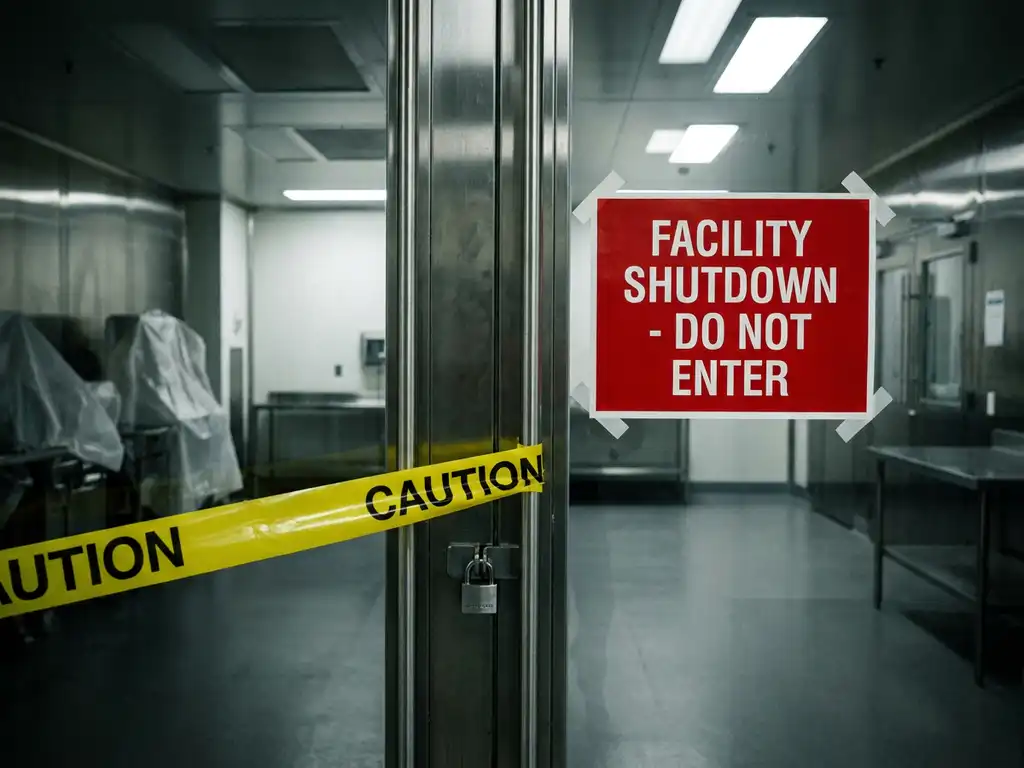
Failing GMP compliance carries serious consequences that can halt manufacturing, trigger product recalls, result in substantial fines, and, in severe cases, expose individuals to criminal prosecution. These consequences apply to any company manufacturing medicinal products or medical devices subject to regulatory oversight. The sections below unpack each type of consequence in detail, from immediate regulatory action through to long-term reputational damage and the path back to compliance.
What types of regulatory actions follow a GMP failure?
A GMP failure typically triggers a cascade of regulatory actions, starting with formal observations during an inspection and escalating to warning letters, import alerts, manufacturing suspensions, or the withdrawal of a manufacturing authorisation. The severity of the response depends on the nature of the deficiency, whether it is critical, major, or minor, and the company’s history of compliance.
Regulatory authorities such as the European Medicines Agency (EMA), national competent authorities within the EU, and the US Food and Drug Administration (FDA) each have their own enforcement frameworks, but the pattern is broadly consistent. An inspector who identifies critical deficiencies, those posing an immediate risk to patient safety, will escalate quickly. Authorities may issue a Qualified Person Declaration of Non-Compliance, restrict batch release, or suspend the manufacturing site’s licence entirely.
For companies operating across multiple markets, a GMP finding in one jurisdiction can trigger parallel actions elsewhere. Regulatory agencies share inspection intelligence through frameworks like the Pharmaceutical Inspection Co-operation Scheme (PIC/S), meaning a single inspection failure can have global reach. Understanding our full range of GMP compliance services can help you identify where your organisation is most exposed before regulators do.
What happens to products already on the market after a GMP breach?
Products already on the market can be subject to recall, batch restriction, or market withdrawal following a confirmed GMP breach. If the deficiency raises a credible risk that distributed batches are substandard, contaminated, or incorrectly labelled, the competent authority will typically require a recall classified by risk level, from a precautionary withdrawal to an urgent public safety recall.
Recalls are operationally complex and expensive. The company must trace affected batches through the supply chain, notify distributors, wholesalers, and, in some cases, patients or healthcare providers, and document every step for regulatory review. Failure to manage a recall efficiently compounds the original GMP violation and signals to regulators that the company’s quality systems are broadly inadequate.
Beyond the recall itself, all batches manufactured during the period in question may be placed on hold pending an investigation. This can effectively remove a product from the market for weeks or months while the root cause is identified and corrective actions are verified, creating supply shortages that affect patients and damage commercial relationships.
How does GMP non-compliance affect a company’s financial position?
GMP non-compliance can impose significant financial pressure through a combination of direct costs and lost revenue. Direct costs include recall expenses, regulatory fines, legal fees, remediation investments, and the cost of repeat inspections. Indirect costs, often larger in total, include lost sales during manufacturing suspensions, contract penalties, and the expense of rebuilding quality systems under regulatory scrutiny.
Manufacturing suspensions are particularly damaging for companies with a limited product portfolio. If a single site is shut down, revenue can stop entirely while fixed costs continue. For contract manufacturers, a GMP failure can trigger termination clauses in client agreements, wiping out multiple revenue streams simultaneously.
Investors and lenders also respond to GMP failures. Publicly listed companies frequently see share price drops following warning letters or import alerts, and lenders may reassess credit terms if a GMP breach signals systemic quality management problems. The financial impact therefore extends well beyond the immediate cost of remediation.
Can GMP violations lead to criminal liability?
Yes, GMP violations can lead to criminal liability, particularly where non-compliance results in patient harm, involves deliberate falsification of records, or constitutes fraud. In the EU and the US, both corporate entities and individuals, including senior managers and Qualified Persons, can face prosecution in serious cases.
In the EU, Directive 2001/83/EC and national implementing legislation in member states create criminal offences for manufacturing medicinal products without authorisation or for placing substandard medicines on the market. In the US, the Federal Food, Drug, and Cosmetic Act allows for criminal prosecution of corporate officers under the Park Doctrine, even without proof of personal wrongdoing, if they held a position of responsibility and failed to prevent a violation.
Criminal proceedings are rare and typically reserved for the most egregious failures, but the risk is real. Regulators increasingly view repeat non-compliance or deliberate concealment of deficiencies as grounds for referring matters to prosecutors. For individuals in quality and regulatory leadership roles, this underlines why robust GMP systems are not just a business requirement but a personal professional responsibility.
How does a GMP failure damage long-term reputation and partnerships?
A GMP failure damages long-term reputation by eroding trust with regulators, partners, customers, and the public. Regulatory databases such as the FDA’s warning letter database and the EMA’s inspection findings reports are publicly accessible, meaning a GMP failure becomes part of a company’s permanent record that any partner, investor, or customer can review.
For contract manufacturers and suppliers, the reputational damage can be especially acute. Pharmaceutical companies conducting supplier qualification audits routinely screen for regulatory history. A warning letter or manufacturing suspension on record can disqualify a site from consideration entirely, closing off business opportunities for years after the original event.
Partner relationships are also at risk. Marketing authorisation holders who rely on a contract manufacturing site may be contractually entitled to terminate or suspend agreements following a GMP breach. Licensing partners and co-development collaborators may trigger material adverse change clauses. Rebuilding these relationships requires not only demonstrating corrective action but also restoring confidence over time, which takes consistent performance across multiple inspection cycles. Learning more about Starodub’s background and expertise can give partners and stakeholders the assurance they need when evaluating long-term collaboration.
How can companies recover GMP compliance status after a violation?
Companies recover GMP compliance status by conducting a thorough root cause analysis, implementing a documented Corrective and Preventive Action (CAPA) plan, and demonstrating sustained improvement to the satisfaction of the relevant regulatory authority. Recovery is a structured process, not a single event, and regulators expect evidence of systemic change rather than surface-level fixes.
The typical recovery pathway involves several parallel workstreams:
- Root cause investigation: Identifying not just what went wrong but why the quality system failed to prevent or detect it.
- CAPA implementation: Executing corrective actions with clear owners, timelines, and effectiveness checks built in.
- Regulatory communication: Responding to inspection observations or warning letters with a detailed, credible response that addresses every finding.
- Re-inspection preparation: Preparing the site and personnel for a follow-up inspection that will verify whether commitments have been fulfilled.
- Culture and training: Addressing any underlying behavioural or cultural factors that contributed to the failure, since regulators assess quality culture as part of their evaluation.
The timeline for recovery varies. A company responding well to a minor finding may restore full compliance status within months. A site that received a manufacturing suspension following critical deficiencies may face a much longer path, particularly if it needs to rebuild its quality management system from the ground up. Engaging experienced regulatory support early in the process accelerates recovery and reduces the risk of an inadequate response making the situation worse.
How Starodub supports GMP compliance and recovery
We work with biopharmaceutical and medical device companies at every stage of the GMP compliance lifecycle, from proactive gap assessments through to post-inspection remediation and regulatory response. Whether you are preparing for an authority inspection, managing the aftermath of a GMP finding, or looking to strengthen your quality systems before issues arise, our team provides practical, experienced support.
Here is how we help:
- GMP gap assessments: We review your manufacturing and quality systems against current EU GMP requirements and identify vulnerabilities before regulators do.
- Inspection preparation: We prepare your team for authority inspections, including mock inspections and coaching on how to respond to inspector questions effectively.
- Post-inspection response: We help you draft credible, thorough responses to inspection observations and warning letters, with CAPA plans that satisfy regulatory expectations.
- Regulatory strategy: We advise on the most efficient path to restoring compliance and manufacturing authorisation status, drawing on our experience across EU national competent authorities and the EMA.
- Quality, Compliance and Operational Improvements: Our dedicated division, led by Lean Six Sigma Master Black Belts with over 25 years of pharmaceutical industry experience, supports systemic quality improvements that address root causes rather than symptoms.
GMP failures are serious, but with the right support, they are manageable. If you are facing a compliance challenge or want to reduce your risk before a problem occurs, contact Starodub today to speak with one of our regulatory experts.
Related Articles
- Can small manufacturers realistically maintain full GMP compliance?
- What comes first, IND or NDA?
- What regulatory affairs services do medical device companies need?
- How do you prepare for medical device audits?
- How do post-market surveillance requirements work?
This content was generated with the help of AI and it may contain mistakes