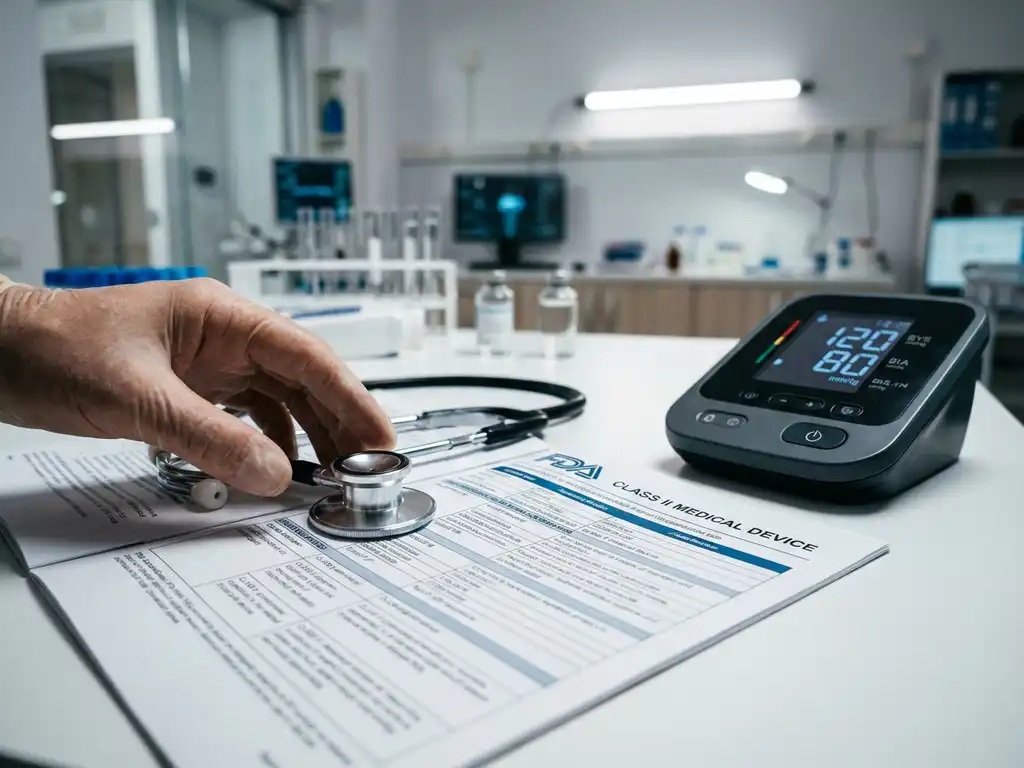
Class II medical devices are moderate-risk medical products that require FDA premarket notification through the 510(k) process before reaching the market. They fall between low-risk Class I devices and high-risk Class III devices in the three-tier classification system. These devices typically require special controls and regulatory oversight to ensure safety and effectiveness for patient use.
What exactly is a Class II medical device, and how is it different from other classes?
Class II medical devices represent the moderate-risk category in the FDA’s three-tier classification system. These devices pose more potential risk to patients than Class I devices but less than Class III devices, requiring premarket notification rather than full clinical trials.
The FDA classifies medical devices based on risk level and the regulatory controls needed. Class I devices are low-risk products, such as bandages and tongue depressors, that require minimal regulatory oversight. Class III devices are high-risk products, such as pacemakers and heart valves, that require extensive premarket approval supported by clinical data.
Class II devices occupy the middle ground, requiring special controls in addition to general controls. These special controls include performance standards, postmarket surveillance, patient registries, and specific labeling requirements. The key distinguishing feature is the 510(k) premarket notification requirement, under which manufacturers must demonstrate substantial equivalence to a predicate device already on the market.
Medical device regulation for Class II products balances safety assurance with efficient market access. Unlike Class III devices, which may take years to obtain approval, Class II devices typically receive clearance within 90 to 180 days if they meet regulatory requirements.
What are common examples of Class II medical devices?
Class II medical devices encompass a wide range of diagnostic and therapeutic equipment used across medical specialties. Common examples include surgical drapes, pregnancy test kits, powered wheelchairs, infusion pumps, and X-ray machines.
In surgical settings, Class II devices include electrosurgical units, surgical staplers, and endoscopic equipment. Diagnostic devices include blood glucose meters, thermometers, and various imaging devices, such as ultrasound machines. Respiratory devices include ventilators, oxygen concentrators, and CPAP machines.
Cardiovascular Class II devices include blood pressure monitors, electrocardiograph machines, and certain catheters. Dental devices include dental lasers, amalgam separators, and certain dental implants. Orthopedic devices include bone screws, plates, and certain prosthetic components.
Software-based medical devices increasingly fall into Class II, including clinical decision support software and certain mobile medical applications. Contact lenses, hearing aids, and many in vitro diagnostic tests are also common Class II device categories that healthcare professionals encounter regularly.
What regulatory requirements must Class II medical devices meet?
Class II medical devices must comply with 510(k) premarket notification requirements, as well as general controls and special controls specific to their device type. Manufacturers must submit a 510(k) application demonstrating substantial equivalence to a legally marketed predicate device.
Compliance with the Quality System Regulation (QSR) is mandatory, requiring manufacturers to establish and maintain procedures for design controls, document controls, and corrective and preventive actions. These systems help ensure consistent device quality and safety throughout the manufacturing process.
Labeling requirements include specific information about intended use, contraindications, warnings, and precautions. The FDA requires clear instructions for use and any necessary training requirements for healthcare providers. Medical Device Reporting (MDR) obligations require manufacturers to report adverse events and device malfunctions.
Registration and listing requirements mandate that manufacturers register their facilities with the FDA and list their devices annually. Establishment inspection requirements help ensure facilities comply with good manufacturing practices. Some Class II devices require additional controls, such as performance standards, guidance documents, or postmarket studies, depending on their specific classification.
How does the 510(k) clearance process work for Class II devices?
The 510(k) clearance process requires manufacturers to demonstrate substantial equivalence to a predicate device through comprehensive documentation submitted to the FDA. The process typically takes 90 to 180 days from submission to a clearance decision.
Identifying a predicate device is a crucial starting point, requiring manufacturers to find a legally marketed device with the same intended use and similar technological characteristics. The substantial equivalence comparison must address safety and effectiveness through performance data, bench testing, or clinical information.
Required documentation includes a device description, an intended use statement, a substantial equivalence comparison, performance testing data, software documentation (if applicable), labeling, and a risk analysis. The FDA may request additional information during its review, which can extend the timeline.
The review process involves FDA scientists evaluating the submission for completeness, scientific validity, and regulatory compliance. There are three possible outcomes: clearance (the device may be marketed), a complete response letter (additional information is needed), or denial (substantial equivalence is not demonstrated). Most Class II devices receive clearance when properly prepared and documented.
What happens if a Class II medical device doesn’t meet regulatory requirements?
Noncompliance with Class II medical device requirements can result in FDA enforcement actions ranging from warning letters to criminal prosecution. The FDA has broad authority to protect public health through various regulatory mechanisms.
Warning letters are the most common enforcement action and require manufacturers to address violations within specified timeframes. Failure to respond adequately can escalate to consent decrees, injunctions, or import alerts that prevent product distribution.
Market withdrawal may be voluntary or mandatory, depending on the severity of the violation. Manufacturers must implement corrective and preventive actions (CAPA) to address root causes and prevent recurrence. Class I recalls (a reasonable probability of serious adverse health consequences) require immediate action and public notification.
Civil monetary penalties can reach significant amounts for repeat violations or serious noncompliance. Criminal prosecution is possible for knowingly introducing adulterated or misbranded devices. Manufacturers may also be required to notify customers, implement field corrections, and potentially provide refunds or device replacements, depending on the nature of the violation.
How Starodub helps with Class II medical device regulatory compliance
We provide comprehensive regulatory support for Class II medical devices throughout the entire product lifecycle, from initial classification through ongoing compliance maintenance. Our expertise in medical device regulation ensures manufacturers navigate complex requirements efficiently while meeting regulatory deadlines.
Our Class II device services include:
- Device classification guidance and regulatory pathway determination
- 510(k) preparation, submission, and FDA correspondence management
- Predicate device identification and substantial equivalence strategies
- Quality management system development and implementation
- Clinical evaluation and performance testing guidance
- Labeling review and regulatory compliance verification
- Post-market surveillance and adverse event reporting support
As an experienced regulatory consulting firm, our team combines deep regulatory knowledge with practical industry experience, ensuring your Class II medical devices meet all FDA requirements while optimizing time to market. We work as your dedicated regulatory partner, providing strategic guidance tailored to your specific device and business objectives.
Ready to ensure your Class II medical device meets all regulatory requirements? Contact us today to discuss how our regulatory expertise can support your product development and market access goals.
Related Articles
- What is the difference between ICH and FDA guidelines?
- Can small biotech companies handle regulatory affairs internally?
- Why is regulatory affairs important for biotech companies?
- What regulatory changes are expected in 2026?
- Can you improve approval timelines by working with regulatory experts?
This content was generated with the help of AI and it may contain mistakes