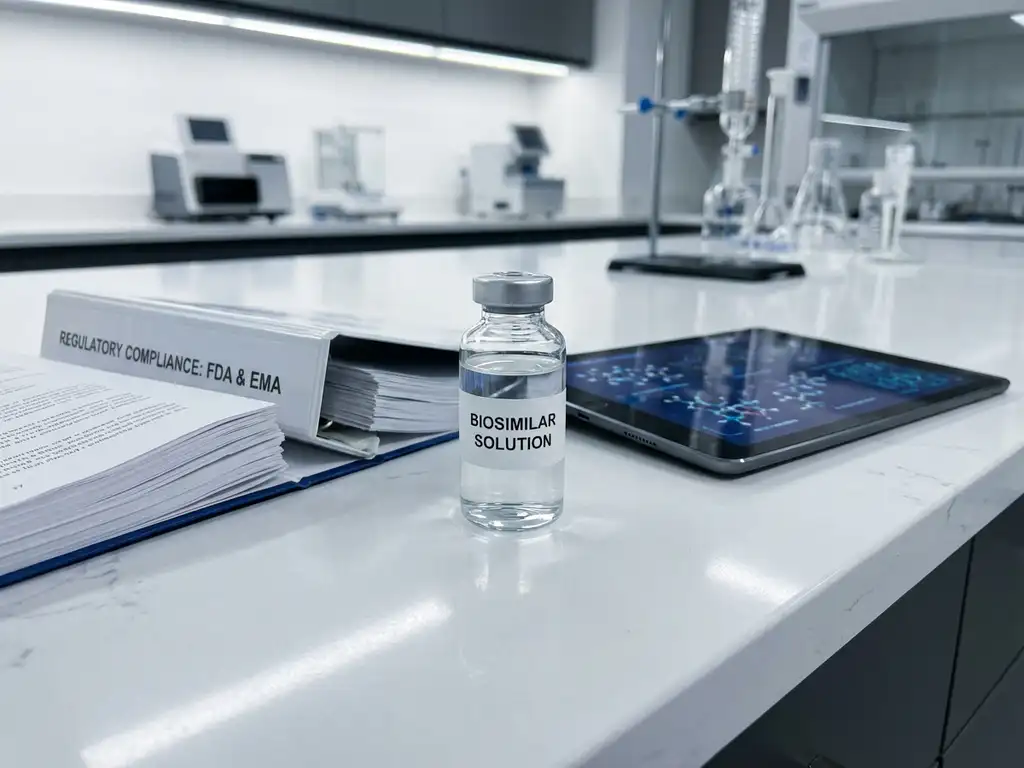
Developing a successful biosimilar requires a comprehensive regulatory affairs strategy that addresses the unique challenges of biological medicines. Unlike traditional generic drugs, biosimilars demand extensive analytical and clinical evidence to demonstrate similarity to their reference products. This complex regulatory landscape spans multiple jurisdictions, each with its own requirements and approval pathways.
What are biosimilars and how do they differ from generic drugs?
Biosimilars are biological medicines that are highly similar to an already approved reference biological product. Unlike generic drugs, which are exact chemical copies of small-molecule medicines, biosimilars cannot be identical to their reference products because of their complex biological nature and manufacturing processes.
The fundamental difference lies in molecular complexity. Generic drugs contain simple chemical compounds that can be replicated precisely through chemical synthesis. Biosimilars, however, are produced using living cells and involve complex proteins with intricate three-dimensional structures. These biological manufacturing processes introduce natural variability, making exact replication impossible.
This complexity necessitates different regulatory approaches. Generic drugs rely primarily on bioequivalence studies to demonstrate therapeutic equivalence. Biosimilars require comprehensive analytical characterisation, comparative studies, and often clinical trials to establish biosimilarity. The regulatory pathway acknowledges that minor differences may exist while ensuring that these differences do not affect safety or efficacy.
Manufacturing processes for biosimilars must be independently developed, as the original manufacturing details remain proprietary. This requirement adds significant complexity to development and regulatory submission strategies.
What regulatory pathway must biosimilars follow for approval?
Biosimilars follow a stepwise comparative approach that begins with extensive analytical studies and progresses through preclinical and clinical development. This pathway requires demonstrating similarity at every level, from molecular structure to clinical performance, using the reference product as the comparator throughout development.
The regulatory pathway typically includes several key phases. Analytical comparability studies form the foundation, examining physicochemical properties, biological activity, and structural characteristics. These studies must demonstrate that the biosimilar and reference product are highly similar across multiple analytical methods.
Preclinical studies follow, including pharmacokinetic and pharmacodynamic assessments in relevant animal models. These studies evaluate whether any observed analytical differences translate into functional differences. Clinical development usually begins with pharmacokinetic studies in healthy volunteers or patients, followed by comparative efficacy and safety studies.
Regulatory submissions must include comprehensive quality documentation covering manufacturing processes, analytical methods, and stability data. The dossier structure follows established guidelines but requires extensive comparative data packages that demonstrate biosimilarity across all development phases.
How do you demonstrate biosimilarity to regulatory authorities?
Demonstrating biosimilarity requires a totality-of-evidence approach that combines analytical, preclinical, and clinical data to establish comprehensive comparability. The strength of analytical similarity determines the extent of clinical studies required, with robust analytical packages potentially reducing clinical development needs.
The demonstration process begins with comprehensive analytical characterisation using state-of-the-art methods to compare structural and functional properties. This includes primary structure analysis, higher-order structure assessment, post-translational modifications, and biological activity measurements. Any differences identified must be thoroughly investigated and justified.
Pharmacokinetic and pharmacodynamic studies provide functional evidence of similarity. These studies typically use crossover designs in homogeneous populations to minimise variability and detect potential differences. Biomarker selection becomes crucial for demonstrating comparable biological effects.
Clinical efficacy studies focus on sensitive populations and endpoints that can detect meaningful differences between products. The goal is not to re-establish efficacy but to confirm comparable performance. Safety databases must be sufficient to detect potential differences in immunogenicity and adverse event profiles.
What are the key regulatory considerations for different therapeutic areas?
Different therapeutic areas present unique regulatory challenges for biosimilar development, particularly regarding endpoint selection, patient populations, and safety monitoring requirements. Oncology, immunology, and endocrinology each have specific considerations that affect regulatory strategy development.
Oncology biosimilars face particular challenges due to combination therapy use and the need for sensitive efficacy endpoints. Pharmacokinetic studies often become primary endpoints, as overall survival studies would be impractical. Regulatory authorities may require studies in both adjuvant and metastatic settings, depending on the reference product’s indications.
Immunology applications require careful consideration of immunogenicity risks and long-term safety monitoring. The complexity of immune system interactions means that analytical similarity becomes even more critical. Patient registries and post-marketing surveillance plans often require enhanced pharmacovigilance activities.
Endocrinology biosimilars, particularly insulin products, may require specific clinical study designs that account for different patient populations and dosing regimens. Hypoglycaemia monitoring and long-term safety considerations become paramount in study design and regulatory assessment.
How do global regulatory requirements for biosimilars differ?
Global regulatory frameworks for biosimilars share common scientific principles but differ in specific requirements, approval pathways, and post-marketing obligations. Understanding these differences is crucial for developing efficient global regulatory strategies that maximise market access opportunities.
The European Medicines Agency pioneered biosimilar regulation and maintains comprehensive guidelines covering various product classes. The EMA’s approach emphasises scientific assessment through detailed analytical and clinical comparability requirements. Automatic substitution policies vary among EU member states, affecting market access strategies.
The US Food and Drug Administration follows similar scientific principles but has different nomenclature requirements and interchangeability designations. Achieving interchangeability status requires additional switching studies, creating a two-tier approval system. The FDA also maintains specific guidance documents for different therapeutic areas.
Other markets, including Canada, Australia, and emerging economies, have developed their own frameworks, often building on EMA or FDA approaches. Some markets accept regulatory reliance strategies, while others require local clinical data. Understanding these requirements early in development enables efficient global submission strategies.
How Starodub helps with biosimilar regulatory strategy
We provide comprehensive biosimilar regulatory support that addresses the unique complexities of biological medicine development and approval. Our regulatory services span the entire product lifecycle, from early development strategy through post-marketing compliance, ensuring efficient pathways to global market access.
Our biosimilar regulatory services include:
- Strategic regulatory pathway development and jurisdiction-specific guidance
- Analytical comparability strategy design and regulatory assessment
- Clinical development planning and protocol optimisation
- Regulatory submission preparation and agency interaction support
- Global regulatory strategy coordination across multiple markets
- Post-marketing compliance and pharmacovigilance planning
Our team combines a deep understanding of biosimilar science with practical regulatory experience across major global markets. We help navigate complex requirements while developing cost-effective strategies that accelerate time to market. Contact us to discuss how we can support your biosimilar development programme with expert regulatory guidance tailored to your specific product and market objectives.
Related Articles
- What is GMP compliance and why does it matter?
- How do you create a regulatory pathway strategy for new drugs?
- How to Build and Maintain a Quality Management System for Medical Devices
- How do you maintain regulatory compliance after approval?
- What are the steps for Class III device approval?
This content was generated with the help of AI and it may contain mistakes